


Burnout vs stress vs depression: what's the difference?
Stress, burnout and depression can feel very similar from the inside - exhausted, overwhelmed, not quite yourself. That overlap makes them easy to confuse, but they're not the same thing, and knowing which one you're dealing with makes it much easier to find the right support.
In short: stress is your body's short-term reaction to pressure, burnout is a state of chronic exhaustion caused by prolonged stress (usually tied to work), and depression is a persistent mental health condition that affects mood, energy and daily life regardless of the cause. Stress tends to ease once the pressure lifts. Burnout builds up gradually and doesn't resolve with a weekend off. Depression can develop from either - or appear with no obvious trigger at all - and is the one most likely to need clinical support.
This article breaks down what separates the three, where they overlap, and how to get free, confidential help from Ben whichever one you're facing.
What is stress?
Stress is the body's natural response to pressure or demand - a deadline, a difficult conversation, financial worry, a busy shift. It triggers a short-term "fight or flight" reaction: your heart rate rises, focus sharpens, and once the pressure passes, your body typically returns to normal.
A certain amount of stress is normal, and even useful, in short bursts. It becomes a problem when it's constant - when there's no recovery period between one stressful event and the next.
Read our full guide to stress and pressure.
What is burnout?
Burnout is what happens when stress doesn't let up. The World Health Organization classifies it as an occupational phenomenon - a state of physical and emotional exhaustion caused by prolonged, unmanaged workplace stress. Common signs include:
- Constant exhaustion, even after rest
- Feeling cynical, detached or numb about your job
- Reduced sense of achievement or effectiveness
- Struggling to concentrate or make decisions
- Physical symptoms - headaches, muscle tension, disrupted sleep
Unlike ordinary stress, burnout doesn't lift after a good night's sleep or a day off. It builds over weeks or months and needs a genuine change - in workload, environment, or support - to recover.
Read the full symptoms and causes of burnout.
Steps to help you recover from burnout.
What is depression?
Depression is a persistent low mood that lasts for weeks or months rather than days, and starts to affect your everyday life - your thoughts, feelings, energy, sleep and ability to do the things you'd normally do. Unlike stress or burnout, depression isn't always tied to an obvious cause. It's a recognised health condition, not a sign of weakness, and it's treatable with the right support.
Learn more about depression: symptoms, causes, treatment and support.
Burnout vs stress vs depression: the key differences
The clearest way to tell them apart is by looking at the trigger, the duration, and whether things improve with rest.
|
|
Stress |
Burnout |
Depression |
|---|---|---|---|
|
Trigger |
A specific pressure or demand |
Prolonged, unmanaged stress - usually work-related |
Can follow stress/burnout, or appear with no clear cause |
|
Duration |
Short-term; comes and goes with the pressure |
Builds gradually over weeks or months |
Persists for two weeks or more |
|
Core feeling |
Feeling overwhelmed, "wired" or on edge |
Exhaustion, cynicism, detachment |
Persistent low mood, hopelessness, loss of interest |
|
Does rest help? |
Usually - symptoms ease once the pressure passes |
Not fully - needs a change in circumstances, not just time off |
Not on its own - often needs professional support |
|
Scope |
Tied to the specific stressor |
Usually specific to work or a particular role |
Affects mood and functioning across all areas of life |
|
Typical support |
Workload change, recovery steps, talking to your employer |
Talking therapies, SilverCloud, counselling, and in some cases medication |
How stress, burnout and depression overlap
These three rarely stay in separate boxes. In practice:
- Stress can tip into burnout if it's constant and unmanaged, particularly at work - long hours, high workload, or not enough staff are common drivers.
- Burnout can develop into depression if the exhaustion and detachment go unaddressed for long enough. The two can also occur together, which is why persistent burnout shouldn't be dismissed as "just work stress."
- Depression can arise independently of both - from bereavement, financial pressure, illness, or no single identifiable cause at all.
Because of this overlap, it's common to experience a mix of symptoms rather than a single, clean diagnosis. If you're not sure which applies to you, that's completely normal - and it's exactly the kind of question our free mental health self-assessment is designed to help with.
Stress, burnout and depression in the automotive industry
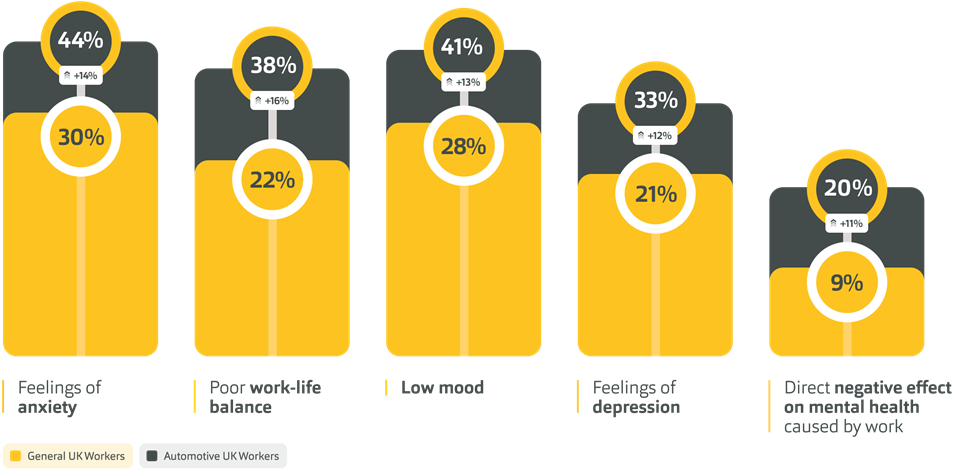
Ben's 2025 Annual Health & Wellbeing Survey of over 1,100 automotive workers found 57% reporting stress, 41% low mood, and 33% experiencing feelings of depression in the past year - among the highest rates of any UK sector surveyed. Long hours, physical strain, customer-facing pressure and target-driven environments all contribute, and the lines between everyday stress, burnout and depression can blur quickly in a demanding, fast-paced workplace.
When to get help
Whichever of the three feels most familiar, it's worth reaching out if:
- Symptoms have lasted more than two weeks
- Rest and time off aren't making a difference
- It's starting to affect your work, relationships or day-to-day life
- You're relying on alcohol or other coping habits to get through the day
- You're having thoughts of harming yourself
⚠️ If you're having thoughts of suicide or self-harm, please call Samaritans free on 116 123 or the NHS on 111 immediately.
How Ben can help
Whatever combination of stress, burnout or depression you're facing, Ben's support is free and confidential for anyone who works, or has worked, in the UK automotive industry - and their family dependants. No referral, no waitlist for most services.
- Free, confidential helpline: call 08081 311 333, any time Get help
- Online chat: chat with us online if you'd rather not call
- SilverCloud: free, 24/7 CBT-based programmes for stress, burnout-related exhaustion, depression and sleep (access code ben) SilverCloud
- Mental health self-assessment: a short quiz for personalised guidance on the right next step Take the self-assessment
- Counselling and life coaching: one-to-one support, free of charge Life coaching
Related reading
- Stress and pressure hub
- Depression: Support for Automotive Workers
- Symptoms and causes of burnout
- Steps to help recover from burnout
- Mental health hub
- Anxiety support for automotive workers
Do you need help? We’ve got your back.
If you need support with money, your mental health, or anything else - we've got your back.



Depression: Symptoms, causes, treatment & support
In the UK, around 1 in 5 people report feeling depressed or anxious, so if you’re experiencing these feelings, you are not alone. With the right support and treatment, recovery is possible.
Frequently asked questions
Is burnout a type of depression?
No. Burnout and depression are distinct, though they can overlap or one can lead to the other. Burnout is specifically tied to prolonged, unmanaged stress - usually from work - and centres on exhaustion, cynicism and reduced effectiveness. Depression is a broader mental health condition affecting mood and functioning across all areas of life, and doesn't need a specific trigger.
Can stress turn into burnout?
Yes. Ongoing, unmanaged stress - particularly at work - is the most common route to burnout. The difference is time and recovery: stress usually eases once the pressure passes, while burnout builds gradually and needs a genuine change in circumstances, not just rest, to resolve.
Can burnout lead to depression?
It can. Prolonged burnout that goes unaddressed can develop into depression, and the two can also occur alongside each other. If burnout symptoms have lasted more than two weeks and aren't improving, it's worth getting support rather than waiting for it to pass on its own.
How do I know if I'm stressed, burnt out, or depressed?
Look at how long it's lasted, what triggered it, and whether rest helps. Stress usually has a clear cause and eases once it's resolved. Burnout builds over weeks or months, is usually tied to work, and doesn't lift with a few days off. Depression persists for two weeks or more, can affect every area of life, and may have no single obvious cause. If you're unsure, Ben's free mental health self-assessment can help point you toward the right support.
Is Ben's support free?
Yes. Everything Ben offers - the helpline, online chat, SilverCloud, counselling and life coaching — is completely free and confidential for anyone in the UK automotive industry, past or present, and their family dependants.
More about stress, burnout and depression

Life Coaching - turning stress and muddled thoughts into clarity
Our team of Life Coaches are supporting a growing number of people who are feeling stressed, juggling different demands at work and at home, unsure where to start or how to move forward.

Symptoms and causes of burnout in automotive jobs
Learn how long hours, high workloads and staff shortages in garages, dealerships and warehouses can lead to burnout, and the early warning signs to look out for.

Steps to help recover from burnout
Maybe you work in a dealership, have a heavy workload or work in a high pressure environment. Whatever your situation, here’s some steps to help you recover if you think you’re experiencing burnout.

Take the Stress MOT Test
Take our short quiz to gauge your stress level and learn how you can keep your pressure low.

Workplace Depression: What It Is And How To Deal With It
If you feel depressed when working, you’re not alone. On this page we will look at how and why depression can impact your work life and how your job can affect your mental health and wellbeing.

Depression: Symptoms, Causes, Treatment & Support - Ben
Depression could affect any of us at any time, with one in five people in the UK reporting feeling depressed or anxious, so, if you’re feeling this way, you’re not alone.

Tips to deal with stress
Stress happens when we have too much pressure. Use these top tips to feel more in control

Top tips to deal with pressure
We all have pressure, those things we have to deal with every day – at home and work. Use these tips to help you manage pressure effectively

Using breathing to reduce stress
Breathing deeply can reduce your stress and anxiety levels. When you breathe deeply you improve your heart rate, reduce the stress on your body and even lower your blood pressure

Feeling overwhelmed from constant negative news?
If you’ve found yourself doomscrolling late at night, feeling helpless or wondering whether you should stop reading the news for the sake of your mental health, you’re not alone.